Mission & Vision
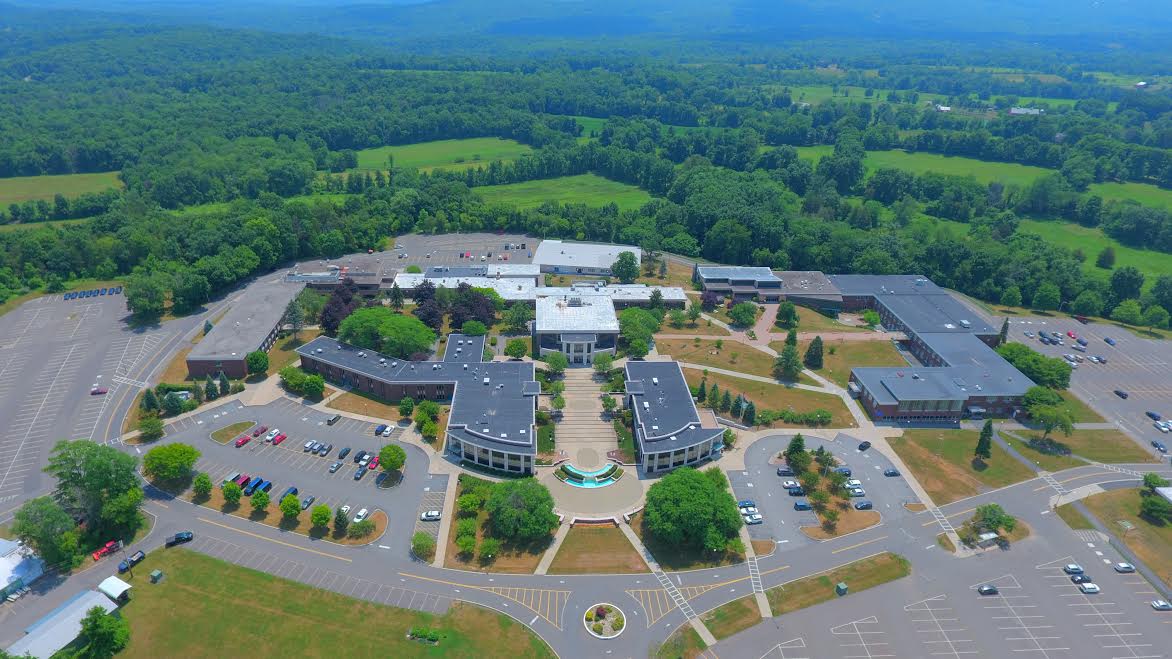
SUNY Ulster
Vision Statement
SUNY Ulster transforms lives by inspiring a community of lifelong learners.
Mission Statement
SUNY Ulster educates the individual and elevates the community.
Values
Respect: Sincere regard and appreciation for all individuals, contributions, and ideas.
Equity: Providing deliberately inclusive access, support, and opportunities for all.
Collaboration: Respecting the expertise of campus community members, and ensuring cooperative internal and external communication.
Excellence: Offering high-quality educational experiences and student support, with a commitment to continuous improvement.
Innovation: Empowering creative responses to community needs to improve services and outcomes.
Integrity: A trusting, honest, and transparent environment that prioritizes individual and institutional commitments.
Institutional Learning Outcomes
Communication and Expression
Students are able to research a topic, develop an argument, and organize supporting
details. They will demonstrate coherent college‐level communication (written and oral)
that informs, persuades, or otherwise engages with an audience. Students will also
evaluate communication for substance, bias, and intended effect. They will also demonstrate
the ability to revise and improve written and oral communication.
Informational Literacy
Students will locate information effectively using tools appropriate to their need
and discipline. They will evaluate information with an awareness of authority, validity,
and bias. Students will also demonstrate an understanding of the ethical dimensions
of information use, creation, and dissemination.
Quantitative and Scientific Literacy
Students will demonstrate mathematical skills, scientific reasoning, and quantitative
reasoning to address problems. They will understand methods of collecting data, interpreting
data, and making inferences/drawing conclusions about data. Students will demonstrate
an ability to represent information symbolically, visually, numerically, and verbally
using technology and numerical data.
Creative, Critical, and Analytical Thinking
Students will demonstrate an understanding of at least one principal form of artistic
expression, including writing and communication, and the creative process inherent
therein. They will clearly identify, analyze, and evaluate ideas, data, and arguments
as they occur in their own or others’ work. Students will acknowledge limitations
such as perspective and bias and develop well‐reasoned (logical) arguments to form
judgments and/or draw conclusions.
Community/Global Consciousness and Responsibility
Students will describe the historical and contemporary societal factors that shape
the development of individual and group identity involving race, class, and gender.
They will analyze the role that complex networks of social structures and systems
play in the creation and perpetuation of the dynamics of power, privilege, oppression,
and opportunity. Students will apply the principles of rights, access, equity, and
autonomous participation in past, current, or future social justice action.